Understanding Roofing Permits and Inspections in Florida
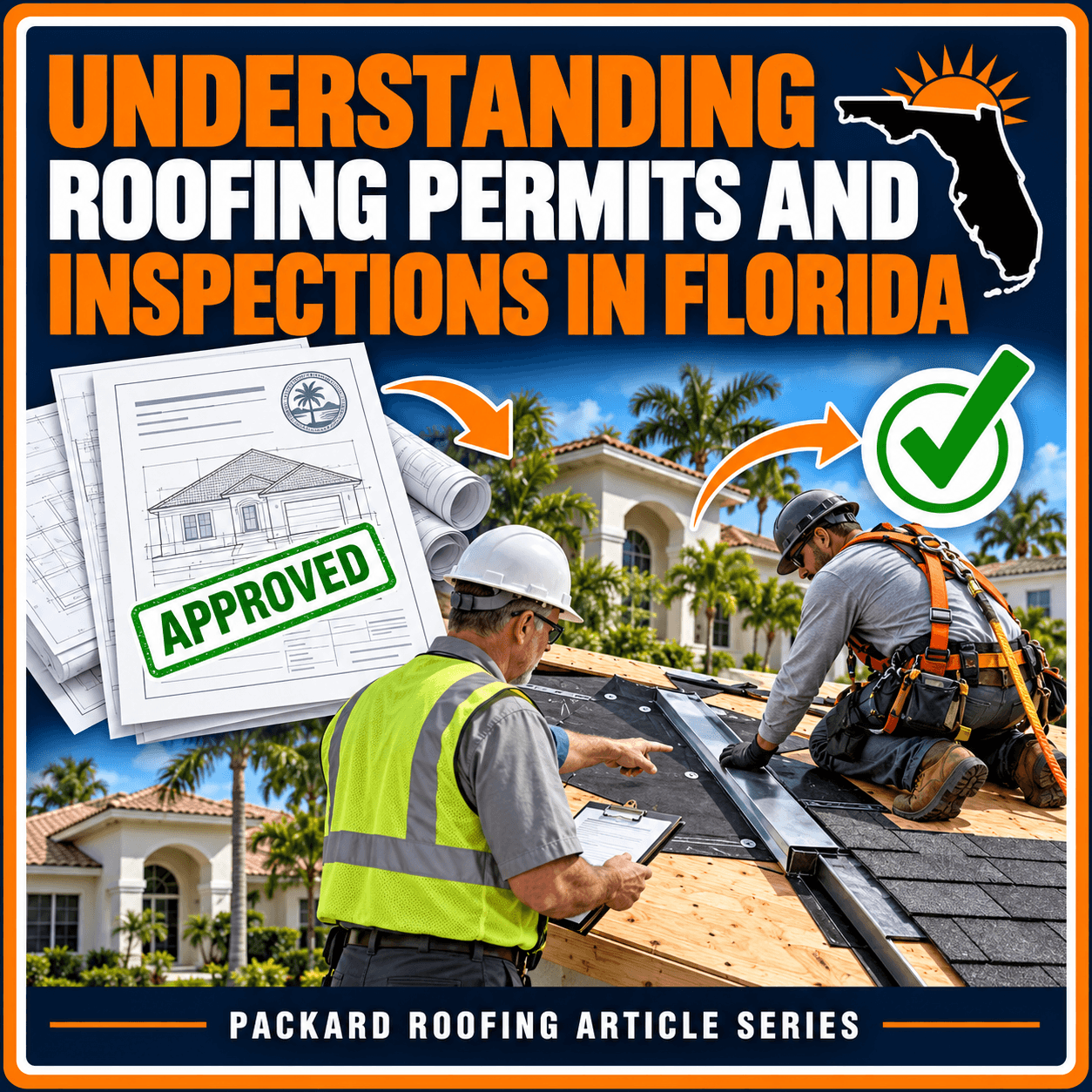
In Florida, roof replacement is a regulated construction project that typically requires a building permit and inspections by the local city or county building department.
The permit process ensures the proposed roofing system meets the current Florida Building Code. Before work begins, the roofing contractor usually submits details on the scope of work, materials, installation method, and product approvals. The building department reviews these documents before issuing the permit.
Inspections are conducted at specific stages once work begins. Requirements vary by jurisdiction and roofing system, but inspections may include:
A roof-deck or sheathing inspection after the old roofing is removed
A dry-in inspection of the underlayment, flashing, drip edge, and related components
An in-progress inspection when tile, metal panels, or other materials will conceal fastening methods
A final inspection after the roofing system is complete
Inspections are important because many critical roof components become hidden as installation progresses. Once underlayment, tile, shingles, or metal panels are installed, it can be difficult to verify that the deck, fasteners, flashing, and other elements were properly installed.
A professional roofing contractor should obtain the permit, schedule required inspections, and address any corrections identified by the inspector. Homeowners should be cautious if a contractor asks them to secure the permit or claims one is unnecessary. Unpermitted work can lead to penalties, complications during a future sale, additional inspections, or costly efforts to document concealed work.
Passing an inspection does not replace the contractor’s responsibility for quality workmanship or guarantee a problem-free roof. However, it provides an independent check that required project stages comply with approved plans and minimum code requirements.
Before making the final payment, homeowners should confirm the final inspection has passed and keep a copy of the permit record with their contract, warranty documents, photographs, and receipts. This documentation is valuable when selling the home, updating insurance records, or addressing future warranty claims.