The Roof Over Your Head
Practical roofing advice for Treasure Coast homeowners from Packard Roofing…

Roof replacement generates significant waste, including old shingles, tile, underlayment, flashing, fasteners, vents, and damaged wood. These materials must be collected and managed appropriately throughout the project.

Roof replacement is a significant project. While the contractor manages the work, a few preparations will protect your belongings, improve access, and ensure a smoother process.

Roof replacement is subject to weather conditions, even with careful planning. In Florida, contractors must consider sudden rain, high winds, extreme heat, and lightning to ensure the home remains protected.

When replacing a roof, homeowners often encounter the terms “tear-off” and “roof-over.” While both involve new roofing materials, they result in different finished systems and inspection possibilities.

When planning a roof replacement, most homeowners focus on visible materials such as shingles, tile, or metal. However, the ventilation system beneath the roof is equally important.

In Florida, roof replacement is a regulated construction project that typically requires a building permit and inspections by the local city or county building department.

The condition of a roof deck is often unclear until the existing roofing materials are removed. If the crew finds damaged decking, these areas must be repaired before installing the new roofing system.

The roof deck is the structural surface beneath roofing materials, supporting the underlayment, shingles, tile, metal, and other components of the finished system. Since it is typically hidden, its full condition can only be assessed once the existing roof covering and underlayment are removed.

A professional roofing estimate should detail the proposed roofing system, included services, and procedures for addressing conditions found during construction, rather than only listing the total price.

A roofing contract should outline the contractor’s services, homeowner responsibilities, and procedures for unexpected conditions. Ask questions until you fully understand the agreement before signing.

Homeowners frequently ask how long roof replacement will take. While contractors can offer estimates, timelines vary based on each project’s specific requirements.

A roof replacement is a major home improvement, but understanding the process can make it more manageable. The sequence may vary depending on roofing material, weather, inspections, and the current roof’s condition.

After a storm, homeowners often want to check for roof damage or prevent water intrusion. However, climbing onto a wet or damaged roof is extremely dangerous, even for those experienced with ladders.

After a hurricane or severe storm, roofing contractors often visit affected communities seeking work. While a door-to-door visit does not mean a contractor is dishonest, homeowners should not feel pressured to authorize an inspection, sign an agreement, or provide insurance information immediately.

Roofing materials naturally deteriorate over time due to Florida’s sunlight, heat, humidity, rain, and seasonal temperature changes. In contrast, storm damage results from a specific weather event and often appears suddenly. Differentiating between normal aging and storm damage can be challenging.

During a tropical storm or hurricane, wind may turn branches, outdoor furniture, construction materials, and other loose items into flying debris. When these objects hit a roof, damage can range from visible openings to small, hard-to-detect defects.
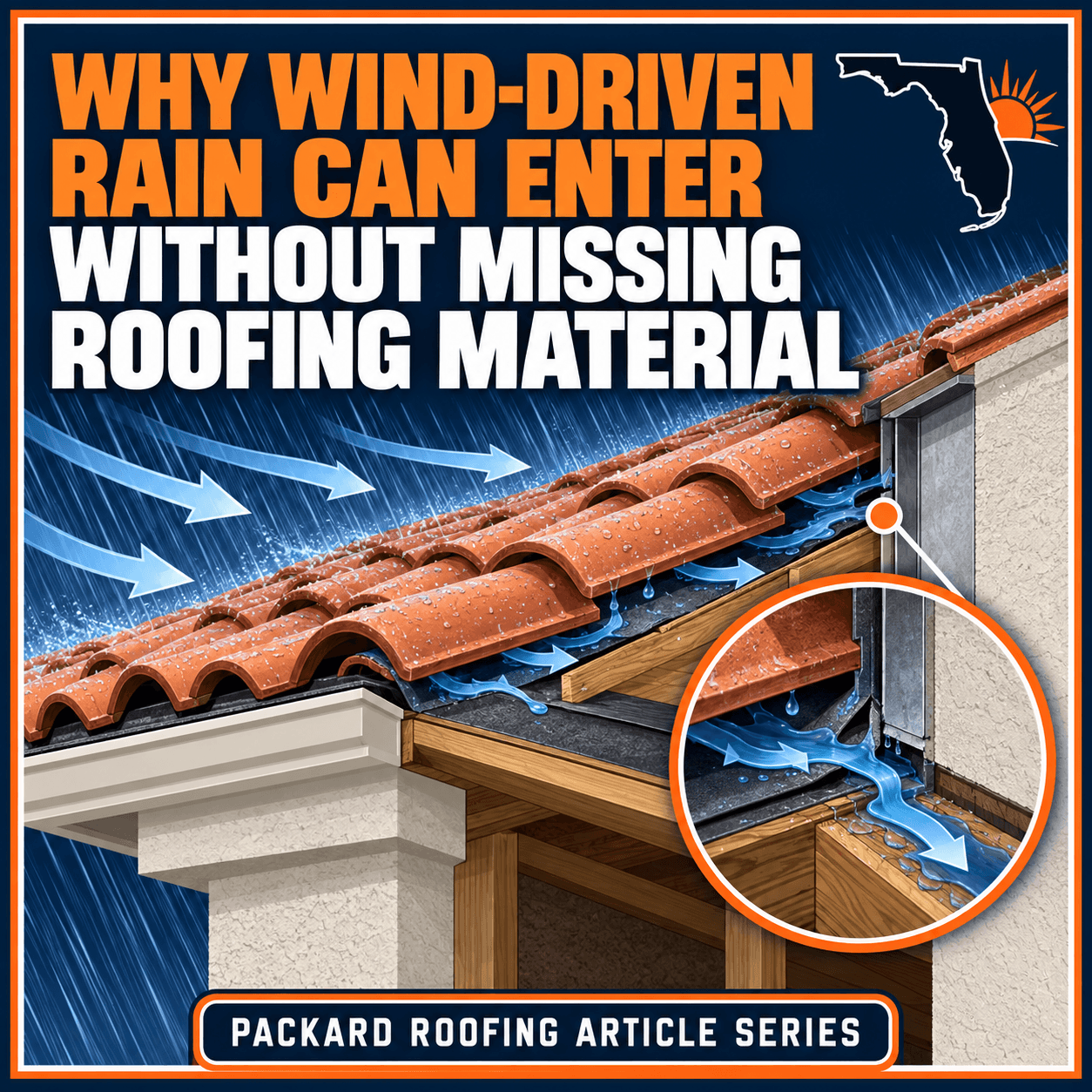
After a storm, homeowners typically check for missing shingles, broken tiles, or visible holes. If none are present, water intrusion may seem unlikely. However, strong winds can drive rain into small openings that remain dry during normal rainfall.

A tropical storm can damage a roof even if it does not reach hurricane strength. Strong winds, heavy rain, and debris may compromise roofing materials without causing visible openings or immediate leaks. For Florida homeowners, a post-storm inspection is a prudent precaution.

If a roof is damaged by a hurricane, severe storm, or other unexpected event, the primary goal of emergency repairs is to prevent further water intrusion. Completing a permanent repair immediately may not be possible or safe.

Homeowners often prepare for hurricane season by securing shutters, gathering emergency supplies, and managing landscaping. Adding roof documentation to this checklist is essential. A clear record of your roof’s pre-storm condition helps identify post-storm changes and supports repair or insurance claims if needed.

During a storm, wind creates pressure differences as it moves over and around a building. These forces can pull upward on the roofing system, a phenomenon known as wind uplift.

After a major storm, a roof may look undamaged from the ground, even if strong winds have compromised key parts of the roofing system. Some issues are subtle, hidden beneath the roof covering, or visible only from specific angles.

After a hurricane, tropical storm, or severe thunderstorm, inspect your property promptly to identify damage before further rainfall occurs. Prioritize safety: wait for local officials to confirm conditions are safe, watch for downed power lines and unstable trees, and avoid climbing onto the roof.

A ceiling stain shows where water became visible, not where it entered your home. Repairing or painting the stain before finding the leak can leave the underlying issue unresolved.

Replacing broken roof tiles may seem simple, but matching new tiles to the existing roof can be challenging. Tiles vary in shape, size, material, and color. While a close visual match is important, the replacement must also fit the roof’s layout.

If you have never scheduled a roof repair, you may wonder what to expect. While steps vary by roofing system and damage, a professional repair starts by identifying the root cause, not just covering visible leaks.
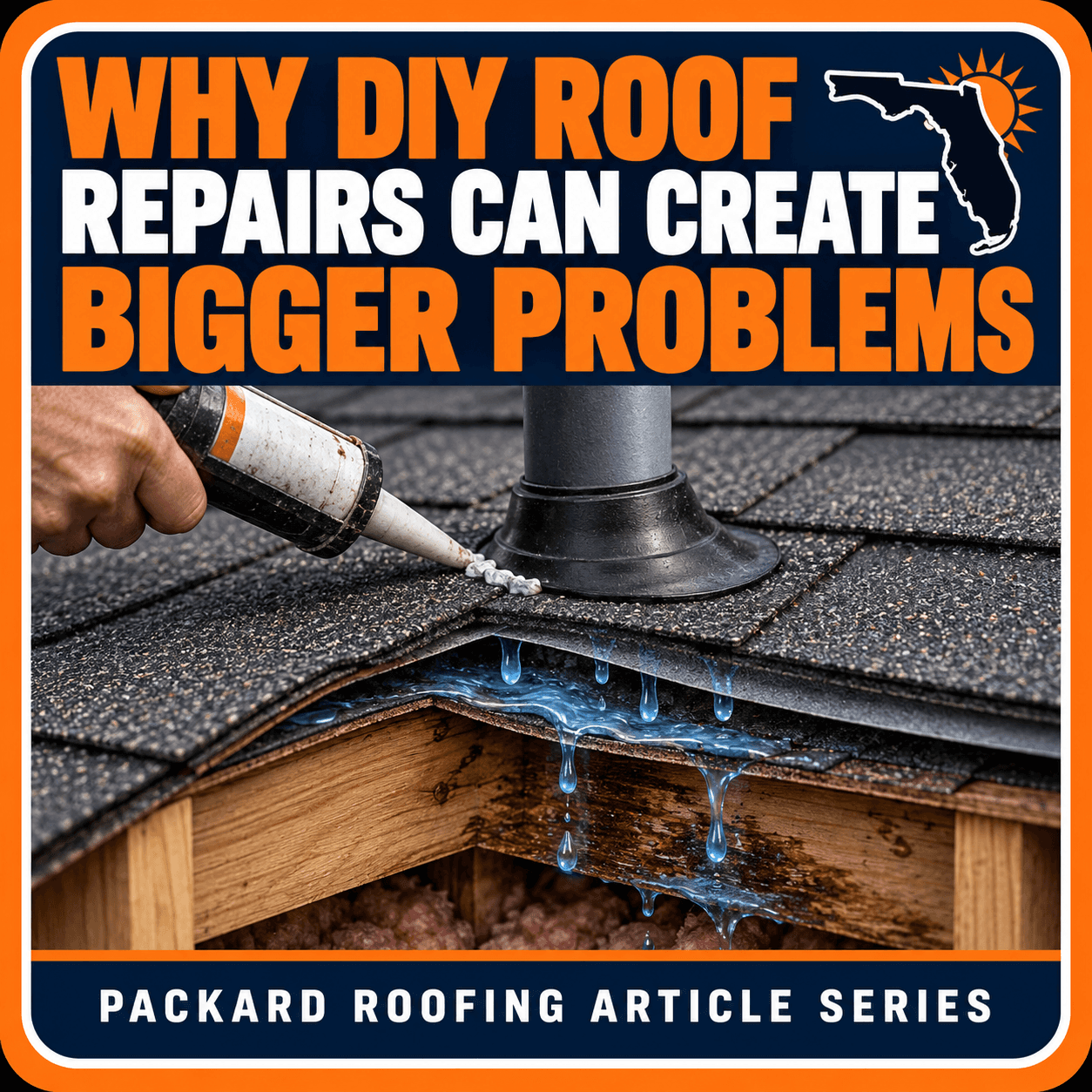
A small roof leak may seem like a quick fix, and using sealant or replacing a tile can appear easier than contacting a roofing contractor. However, repairing without identifying the source allows water intrusion to continue, often leading to more complex repairs later.

Yes. A roof leak can affect more than just the visible area. Water may travel through the attic and reach insulation, drywall, framing, and other materials before it is detected inside the home.

A brown or yellow ceiling stain indicates moisture has reached the drywall. While it may signal a roof leak, the stain alone does not reveal the water’s source or whether the issue is ongoing.

Roofs require openings for plumbing pipes and ventilation, which disrupt the roof covering and must be properly sealed and flashed to prevent leaks. When leaks occur near a pipe or vent, the issue often lies with worn or shifted protective materials rather than the opening itself.

Flashing directs water away from areas where the roof meets walls, chimneys, skylights, vents, or valleys. If flashing loosens, corrodes, or loses its seal, rain can enter even when tiles or shingles appear intact.

Mature trees offer valuable shade in Florida, but overhanging branches can threaten your roof. Damage is not always obvious; even regular contact between branches and the roof can cause issues over time.

Leaves, branches, and other debris frequently collect on roofs, especially near trees. In South Florida, heavy rain can quickly turn this buildup into a drainage problem. Removing debris allows water to flow off the roof and away from the home as intended.

Preventive roof maintenance involves inspecting and addressing minor issues before they develop into leaks or major repairs. For Florida homeowners, it is an effective way to monitor the impact of sun, heavy rain, humidity, and wind on the roof.

Florida roofs endure intense sunlight, high temperatures, heavy rainfall, humidity, and strong winds year-round. These conditions accelerate deterioration, making regular inspections essential for protecting your home.

When water appears on a ceiling or wall, it is common to assume the leak is directly above. However, the visible stain may be several feet from where water actually entered, making leaks difficult to locate.

Roofs in South Florida face intense sunlight, heavy rain, high humidity, strong winds, and tropical weather. Over time, these conditions can reveal weaknesses in even well-built roofing systems. Knowing the most common causes of leaks helps homeowners identify when to seek professional help.

Choosing a roofing contractor is a significant decision. Since your roof protects your entire home, poor workmanship may only become evident during severe weather. Florida homeowners should consider more than just price before signing a contract.

A professional roof inspection involves a thorough evaluation of visible roofing components to identify damage or deterioration and determine if maintenance or repairs are needed.

Florida roofs are exposed to conditions that accelerate aging year-round. Intense ultraviolet radiation, high temperatures, frequent rain, and persistent humidity impact roofing materials differently, making proper installation and regular maintenance essential.

A minor ceiling stain or occasional drip may seem unimportant, especially if it occurs only during heavy or wind-driven rain. However, visible water inside your home often represents just a fraction of the moisture entering your roofing system.

Florida’s hurricane season brings high winds, heavy rain, and flying debris. While no roof is storm-proof, early preparation helps identify vulnerabilities and reduces the risk of preventable damage.
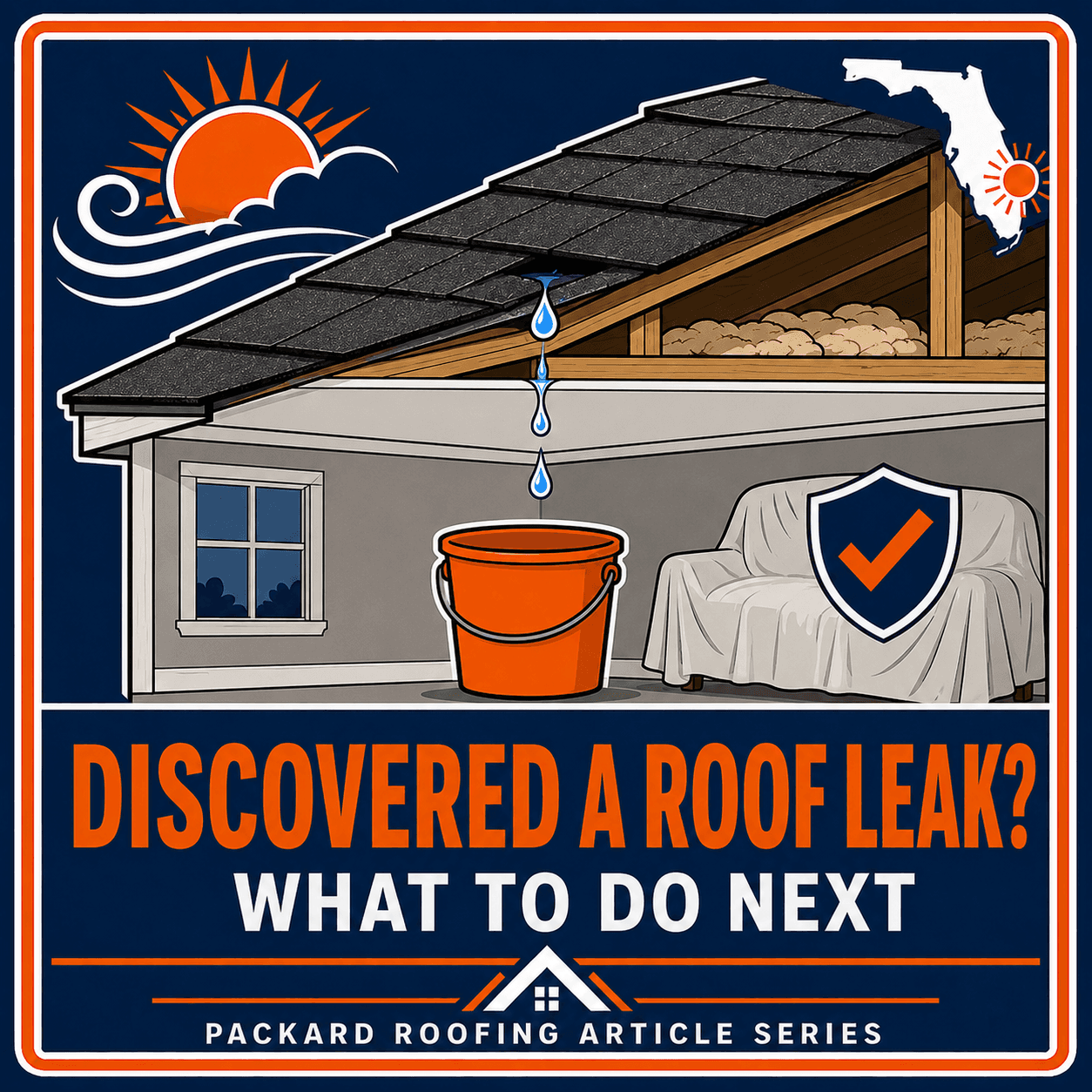
Discovering water entering your home during a heavy Florida rainstorm can be stressful. Prompt and safe action helps limit interior damage while you arrange a professional roof evaluation.

In normal rainfall, water flows downward along the roof’s drainage path. Strong winds can drive rain sideways or upward, allowing water to reach areas that typically remain dry.

Roof underlayment is a critical yet often unseen component of a roofing system. Installed over the roof deck and beneath shingles, tiles, or metal panels, it serves as a secondary barrier against water intrusion.

When a roofing issue arises, homeowners often question whether repair or replacement is necessary. This decision depends on factors such as the roof’s age, condition, type of damage, and remaining service life.

Roofing issues are not always visible from inside the home. On Florida’s Treasure Coast, intense sunlight, heavy rain, humidity, and high winds can gradually weaken roofing materials. Recognizing these seven warning signs helps homeowners address problems before they become more severe.

Not every visible change to a roof indicates failure. Some issues affect only appearance, while others may compromise the roof’s protective function. Recognizing the difference helps homeowners address concerns promptly and prevent minor issues from becoming costly repairs.

Roofs on Florida’s Treasure Coast face harsher conditions than in most other regions. Intense sunlight, high temperatures, heavy rainfall, humidity, salt air, and tropical weather all accelerate roof aging.